Hair care
Scalp care: the foundation under every hairstyle
Healthy hair grows from a comfortable scalp. Itching, flakes and tenderness are signals, and they don't all mean the same thing.
The short answer
Shampoo the scalp often enough to keep it comfortable, keep leave-ins and heavy oils on the hair (not the scalp), and don't assume every flake means dryness. Dandruff usually needs a dandruff shampoo, not more oil. Persistent itch, soreness or thinning deserves a dermatologist.
Dry scalp and dandruff look alike, but they aren't
A dry scalp tends to produce small, fine flakes and feels tight, often worse in cold weather. Dandruff flakes are usually larger and can look oily or yellowish, and the scalp may be itchy or red. Dandruff is common and very treatable, but piling oil on it can make it worse.
| Sign | Often points to | Try first |
|---|---|---|
| Small, dry flakes; tight feeling | Dry scalp | Gentle, non-medicated shampoo; wash a little less harshly |
| Larger, oily or yellowish flakes; itch | Dandruff | A dandruff shampoo on the scalp |
| Itch or bumps after a new product | Product irritation | Stop the new product; note dates |
| Thick, silvery scale; soreness; bleeding | Something more | See a dermatologist |
A table can't diagnose you. It's a starting point for a conversation with a professional.
Using dandruff shampoo on coily hair
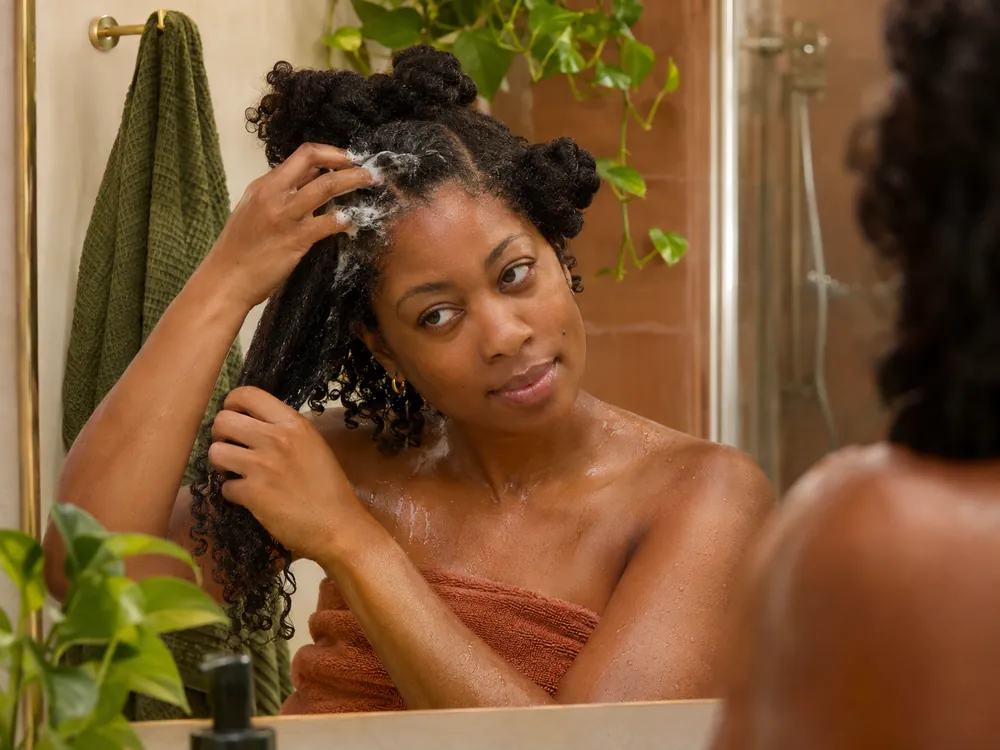
Dermatologists suggest that people with coily or tightly curled hair use dandruff shampoo about once a week, applied to the scalp only, and left on for the time the label says (often around five minutes) before rinsing. Follow it with your usual conditioner on the lengths so your hair doesn't dry out. If it isn't helping after a few weeks, see a dermatologist rather than doubling up.
Daily habits that keep a scalp comfortable
- Wash when your scalp needs it, not when the style looks tired. Ask: is my scalp comfortable, or am I stretching this style too long?
- Keep leave-ins and heavy butters off the scalp. They belong on the lengths and can build up at the roots.
- Don't scratch flakes away with nails or a rat-tail comb. It can break the skin and make things worse.
- Log new products. If itching starts after something new, write down when you started it and when symptoms appeared.
- Never ignore pain from a style. Tenderness, bumps or "tenting" (skin pulled up by a braid) means it's too tight.
When to get help
Make an appointment with a board-certified dermatologist if you have:
- Itching or flaking that keeps coming back despite good care
- New thinning, a receding hairline or bald patches
- Hair loss with burning, tenderness or intense itching
- Sores, swelling, pus or oozing patches
Some scalp conditions that cause permanent hair loss start quietly, and early treatment matters. Read how to prepare for the appointment.
What you'll need
As an Amazon Associate we earn from qualifying purchases. Links go to Amazon search results so you can compare options and prices. We haven't tested these specific products; choose by the description and your own needs.
Dandruff shampoo
Use on the scalp about once a week if tolerated; follow the label's contact time.
See options on AmazonApplicator bottle
Puts shampoo or diluted products right on the scalp, between braids or locs.
See options on AmazonSources & further reading
- How to treat dandruff (AAD)
- Is your dry scalp something more serious? (AAD)
- Black hair: Tips for everyday care (AAD)
This guide is general education based on the dermatologist resources above. It isn't a diagnosis or treatment plan and hasn't been independently clinically reviewed. Follow your clinician's instructions over any routine here.